Career Coach vs Therapist vs Mentor: Benefits of Career Coaching Explained in Under 3 Minutes
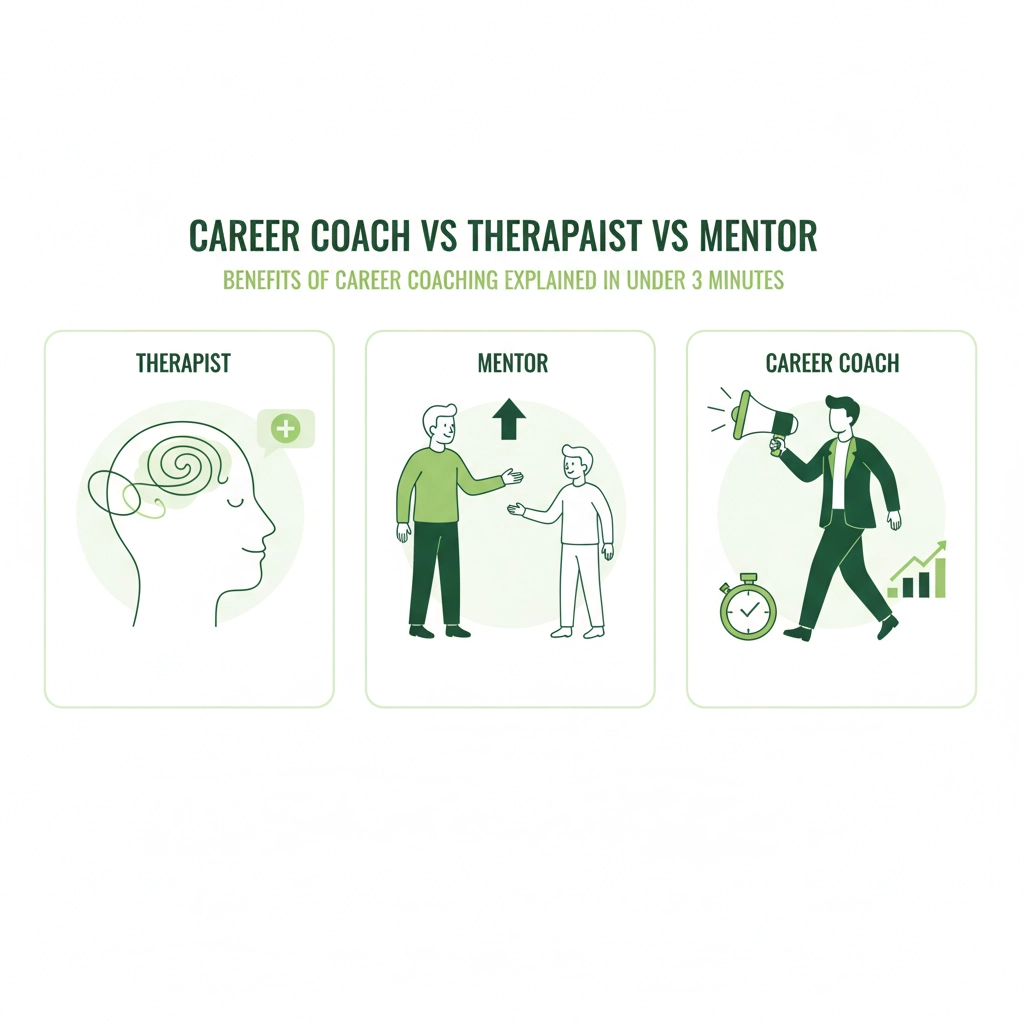
Confused about whether you need a career coach, therapist, or mentor? You’re not alone. Most people mix these up, but understanding the differences can save you time, money, and frustration when you’re looking for the right support.
Let’s break down what each professional does and why career coaching might be exactly what you need to move forward in your professional life.
What Does a Career Coach Actually Do?
A career coach is your future-focused professional partner. Unlike other forms of guidance, they zero in on your work life and career goals with laser precision. Think of them as your personal strategist for professional success.
The benefits of a career coach go way beyond just resume help. They work with you on career planning, professional development, job search strategies, interview preparation, and helping you navigate career transitions. Most importantly, they keep you accountable and moving forward.
Career coaches focus on the present and future: not dwelling on past setbacks or analyzing childhood experiences. They’re all about “What do you want to achieve?” and “How do we get you there?”

Key Benefits of Career Coaching
Here’s what makes career coaching so effective:
Structured, Goal-Oriented Approach: Career coaching typically lasts several months to a year with clear milestones. You’re not just talking: you’re working toward specific, measurable outcomes.
Specialized Professional Focus: While other professionals might touch on career topics, career coaches live and breathe professional development. They understand industry trends, hiring practices, and what employers really want.
Practical, Actionable Support: You’ll leave each session with concrete next steps. Whether it’s updating your LinkedIn profile, practicing interview skills, or mapping out a career transition plan, you always know what to do next.
Accountability Partnership: This might be the biggest benefit of career coaching. Having someone who checks in on your progress and keeps you motivated makes all the difference when you’re trying to make changes.
Present and Future Orientation: Instead of getting stuck analyzing why things went wrong in the past, career coaching helps you move forward with clarity and confidence.
How Therapists Support Your Journey
Therapists are licensed mental health professionals who focus on emotional healing and psychological well-being. They’re trained to help with anxiety, depression, trauma, and other mental health conditions that might be affecting your life: including your work life.
Therapy often involves understanding past experiences and how they influence your current patterns. If you’re struggling with confidence issues, work-related anxiety, or emotional barriers that are holding back your career, therapy can be incredibly valuable.
The relationship with a therapist is typically long-term and focuses on healing and personal growth from the inside out. They’re the right choice when emotional or mental health concerns are the primary obstacle to your success.
What Mentors Bring to the Table
Mentors offer guidance based on their own professional experiences. These relationships are usually informal, unpaid, and can last for years or even decades. A mentor has walked the path you want to walk and can share insights from their journey.
The benefits of having a mentor include:
- Access to their professional network
- Industry-specific insights and advice
- Real-world perspective on career challenges
- Long-term relationship and ongoing support
Mentorship is less structured than coaching. There’s no set timeline or formal process: it’s more about building a relationship with someone whose career you admire.
Quick Comparison: Coach vs Therapist vs Mentor
| Aspect | Career Coach | Therapist | Mentor |
|---|---|---|---|
| Focus | Professional goals & career development | Mental health & emotional healing | Professional growth through experience |
| Time Frame | Present & future focused | Past & present focused | Present & future focused |
| Structure | Formal & structured sessions | Formal & structured sessions | Informal relationship |
| Duration | 3-12 months typically | Varies widely | Long-term (years) |
| Investment | Paid professional service | Paid professional service | Usually unpaid |
| Credentials | Coaching certification | Licensed healthcare provider | No formal requirements |
When Career Coaching Is Your Best Bet
Career coaching is ideal when you need focused, actionable guidance for specific professional challenges. Consider career change coaching if you’re:
- Feeling stuck in your current role
- Considering a major career transition
- Looking to advance or get promoted
- Struggling with job search strategies
- Wanting better work-life balance
- Needing help with networking and professional relationships
Career transition help through coaching is particularly powerful because coaches understand the practical steps needed to make successful changes. They can help you assess your skills, identify target opportunities, and create a strategic plan to get there.

How to Find a Good Career Coach
When you’re ready to invest in career change coaching, here’s what to look for in an ideal career coach:
Relevant Experience: Look for coaches who understand your industry or have experience with the type of transition you’re considering.
Clear Process: A good career coach should be able to explain their methodology and what you can expect from working together.
Success Stories: Ask about their track record. What kind of results have their clients achieved?
Chemistry Matters: You’ll be sharing personal and professional details, so make sure you feel comfortable with their communication style.
Proper Training: Look for coaches with recognized certifications from organizations like the International Coach Federation (ICF).
Most coaches offer initial consultations where you can get a feel for their approach and see if it’s a good fit.
Making Your Decision
The truth is, you might benefit from more than one type of support at different times in your life. Many successful professionals work with therapists for personal growth, maintain mentoring relationships for ongoing guidance, and bring in career coaches when they need focused help with specific professional goals.
If you’re dealing with anxiety or depression that’s affecting your work performance, start with a therapist. If you have access to mentors in your field, nurture those relationships: they’re invaluable for long-term career development.
But if you’re ready to make concrete changes in your professional life and want structured support with clear outcomes, the benefits of a career coach make it the right investment for your future.
The key is being honest about where you are right now and what kind of support would serve you best. There’s no shame in needing help: the most successful people actively seek out guidance to reach their goals.
Ready to Take the Next Step?
If you’re feeling stuck in your career or ready to make a change, you don’t have to figure it out alone. At SCcoaching Group, we specialize in helping professionals like you create clarity, build confidence, and take action toward the career you actually want.
Our career coaching approach focuses on practical strategies and measurable results. Whether you need help with a career transition, want to advance in your current field, or just need someone to help you see your options clearly, we’re here to support you.
Ready to invest in your professional future? Contact us today to schedule a consultation and discover how career coaching can help you achieve your goals faster than you thought possible.
Your ideal career is waiting( let’s create a plan to get you there.)